


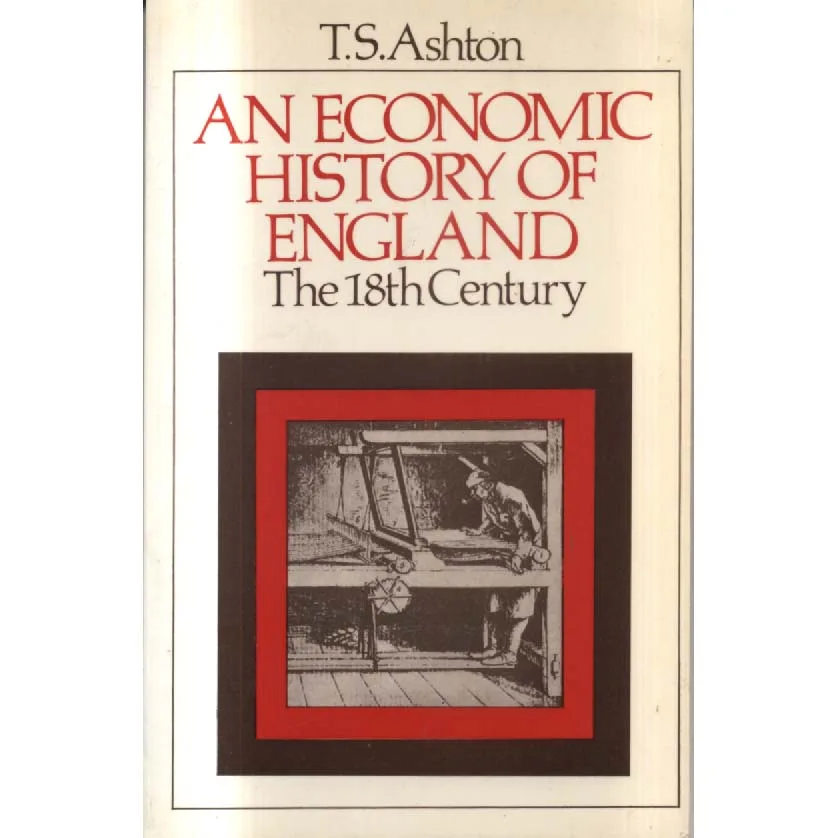
An Economic History Of England - The 18th Century
Publisher: Methuen
Format: Paperback
ISBN: 0416573606
An Economic History of England: The 18th Century (1977) – T. S. Ashton
Methuen | ISBN: 0416573606
Condition: Good | Sold by Crappy Old Books
The eighteenth century. A splendid time to be an English aristocrat, a somewhat less splendid time to be an agricultural labourer, and an absolutely magnificent time to own a coal mine, provided you weren’t personally expected to go down it. Britain was embarking upon an extraordinary economic transformation, discovering that steam, machinery, commerce and a plentiful supply of people willing to work extremely long hours could make a nation remarkably wealthy, although not necessarily the people doing the working.
In An Economic History of England: The 18th Century, distinguished economic historian T. S. Ashton explores the forces that transformed eighteenth-century England from a predominantly agricultural society into the birthplace of the Industrial Revolution.
And what a transformation it was. Agriculture became increasingly productive, towns expanded, trade flourished, manufacturing developed and entrepreneurs began discovering that there were fortunes to be made by producing enormous quantities of goods that previously required considerable patience and manual labour.
Ashton examines the economic foundations of this remarkable period, exploring agriculture, population growth, industry, transport, commerce and the gradual development of the institutions that helped make industrial expansion possible.
The story involves rather more than the traditional procession of heroic inventors standing beside steam engines looking pleased with themselves. Economic change depended upon countless developments, from improvements in farming and the expansion of markets to the availability of capital, changing patterns of employment and the increasingly sophisticated organisation of production.
Naturally, progress was not distributed equally. Landowners, merchants, manufacturers and investors discovered exciting new opportunities for enrichment, while agricultural workers and industrial labourers were frequently invited to contribute to national prosperity by working harder for wages that did not always reflect their enthusiasm.
Ashton was one of the most influential historians of the Industrial Revolution, particularly associated with interpretations that emphasised enterprise, technological progress and the improvements in material life made possible by economic development. His work remains an important contribution to the historiography of Britain’s industrial transformation, even where subsequent historians have challenged aspects of his arguments.
There is something wonderfully ironic about the eighteenth century’s economic achievements. Britain developed increasingly efficient methods of manufacturing goods, transporting commodities and generating wealth, yet somehow failed to discover an equally efficient method of ensuring that everybody enjoyed the resulting prosperity.
Still, the canals were impressive.
This 1977 Methuen edition, offered in Good condition by Crappy Old Books, is an appealing addition to the shelves of economic historians, students of the Industrial Revolution and anyone curious about how Britain became the workshop of the world before eventually discovering that other countries had learned how to operate workshops too.
An illuminating examination of the commercial, agricultural and industrial developments that helped shape modern Britain, written by a historian whose scholarship played a significant role in defining how the period has been understood.
Because behind every great industrial revolution stands a complicated collection of economic forces, ambitious entrepreneurs, ingenious inventors and exhausted workers.
And somewhere in the background, inevitably, a landlord collecting the rent.
Keep browsing: See more History books Other books by TS Ashton
